
Digital Nomad Guide to Limassol, Cyprus
Limassol has quietly become one of the most popular destinations for digital nomads in Europe. While cities like Lisbon and Barcelona get more attention, Limassol offers a compelling combination that is hard to match: excellent internet infrastructure, a favorable tax environment, year-round warm weather, English widely spoken, and a growing international community. This guide covers everything you need to know about working remotely from Limassol.
Why Digital Nomads Choose Limassol
The city’s appeal for remote workers comes down to several converging factors:
Tech infrastructure: Cyprus invested heavily in fiber-optic internet expansion. In Limassol, fiber connections delivering 100 to 200 Mbps are standard in modern buildings. Some properties offer even faster speeds. This is not a city where you will struggle with buffering video calls.
Time zone advantage: Cyprus operates on Eastern European Time (UTC+2, UTC+3 in summer), which makes it workable for collaboration with teams across Europe, the Middle East, Africa, and even the US East Coast in the afternoon hours.
English proficiency: Cyprus is a former British colony, and English is widely spoken in Limassol, particularly in business and service contexts. You will rarely encounter a language barrier in daily life.
International community: The city has attracted large communities from Russia, Ukraine, Israel, the UK, and increasingly from across the EU. Fintech, shipping, and tech companies have established European headquarters here, creating a cosmopolitan professional environment.
Climate: Limassol averages over 300 sunny days per year. Winters are mild (10 to 17 degrees Celsius), and summers are hot but tempered by sea breezes along the coast. The swimming season stretches from May to November.
Internet and Connectivity
This deserves its own section because it is the single most important factor for remote workers.
Home/apartment connections: The two major ISPs, Cyta and Epic, both offer fiber-to-the-home (FTTH) plans. Speeds of 100 Mbps symmetrical are widely available, with 200 Mbps and higher plans in newer buildings. When choosing accommodation, confirm that the property has a dedicated fiber connection rather than shared building Wi-Fi.
Mobile data: 4G coverage is excellent across Limassol, and 5G has been rolling out in urban areas. Prepaid SIM cards from Cyta, Epic, or PrimeTel cost between 10 and 20 euros per month for generous data allowances. These serve as reliable backup connections.
Accommodation Wi-Fi: Quality varies enormously. Older hotels and apartments may still rely on ADSL connections. Modern aparthotels like 26 Suites in Germasogeia have invested in fiber Wi-Fi specifically because of demand from remote workers. Always verify the connection type and speed before booking any long-term accommodation.
Coworking Spaces
Limassol’s coworking scene has grown to serve the expanding remote work community:
The Base (city center): One of Limassol’s larger coworking spaces, offering hot desks, dedicated desks, and private offices. Good for networking with the local startup scene.
Regus/Spaces (multiple locations): International coworking chains with locations in Limassol’s business district. More corporate in feel, suitable for those who need meeting rooms or a professional mailing address.
Hub Nicosia Road: A creative-focused space popular with freelancers and small teams.
Coffee shop working: Limassol has a strong cafe culture, and many coffee shops are laptop-friendly. Places along the Molos promenade and in the old town offer good Wi-Fi and a relaxed atmosphere for light work sessions. Just be mindful that not all cafes welcome extended working.
Working from your accommodation: Many digital nomads in Limassol skip coworking entirely and work from their apartments. If your accommodation has fiber Wi-Fi, a proper desk area, and a comfortable living space, this is a perfectly viable approach. A well-equipped aparthotel suite often provides a better working environment than a hot desk.
Cost of Living
Limassol is not the cheapest city in Europe, but it offers good value relative to Western European capitals.
Accommodation (the biggest variable):
- Studio apartment, long-term rental: 700 to 1,200 euros/month depending on area and quality
- One-bedroom apartment: 900 to 1,500 euros/month
- Aparthotel suite (monthly rate): varies, but properties like 26 Suites offer long-stay pricing that can be competitive with unfurnished rentals when you factor in the included utilities, Wi-Fi, and furnishings
- Shared accommodation: 400 to 700 euros/month
Food:
- Groceries for one person: 250 to 400 euros/month
- Eating out at a local taverna: 12 to 20 euros for a full meal
- Coffee: 2.50 to 4.50 euros
- Beer at a bar: 4 to 7 euros
Transport:
- Monthly bus pass: approximately 40 euros
- Car rental (monthly): 400 to 700 euros
- Fuel: similar to EU average
- Taxi from Germasogeia to city center: 8 to 12 euros
Other:
- Gym membership: 40 to 80 euros/month
- Coworking hot desk: 150 to 250 euros/month
- Mobile phone plan: 15 to 25 euros/month
Total estimated monthly cost: 1,800 to 3,000 euros for a comfortable lifestyle as a single person, depending heavily on accommodation choice.
Visa and Legal Considerations
EU/EEA citizens: Free to live and work in Cyprus without a visa. For stays beyond 90 days, you should register with the local immigration office, which is a straightforward process.
Non-EU citizens: Cyprus introduced a Digital Nomad Visa scheme that allows remote workers employed by companies outside Cyprus to live in the country for up to one year, renewable for an additional year. Key requirements include:
- Proof of employment or self-employment with clients outside Cyprus
- Minimum monthly income of approximately 3,500 euros (verify current thresholds as these can change)
- Health insurance valid in Cyprus
- Clean criminal record
Tax implications: Cyprus has a favorable tax regime, but the specifics depend on your residency status, the duration of your stay, and where your employer or clients are based. The 60-day tax residency rule and the non-domicile regime are particularly relevant for digital nomads considering a longer stay. Consulting a local tax advisor is strongly recommended if you plan to stay more than a few months.
Best Neighborhoods for Digital Nomads
Germasogeia Tourist Area
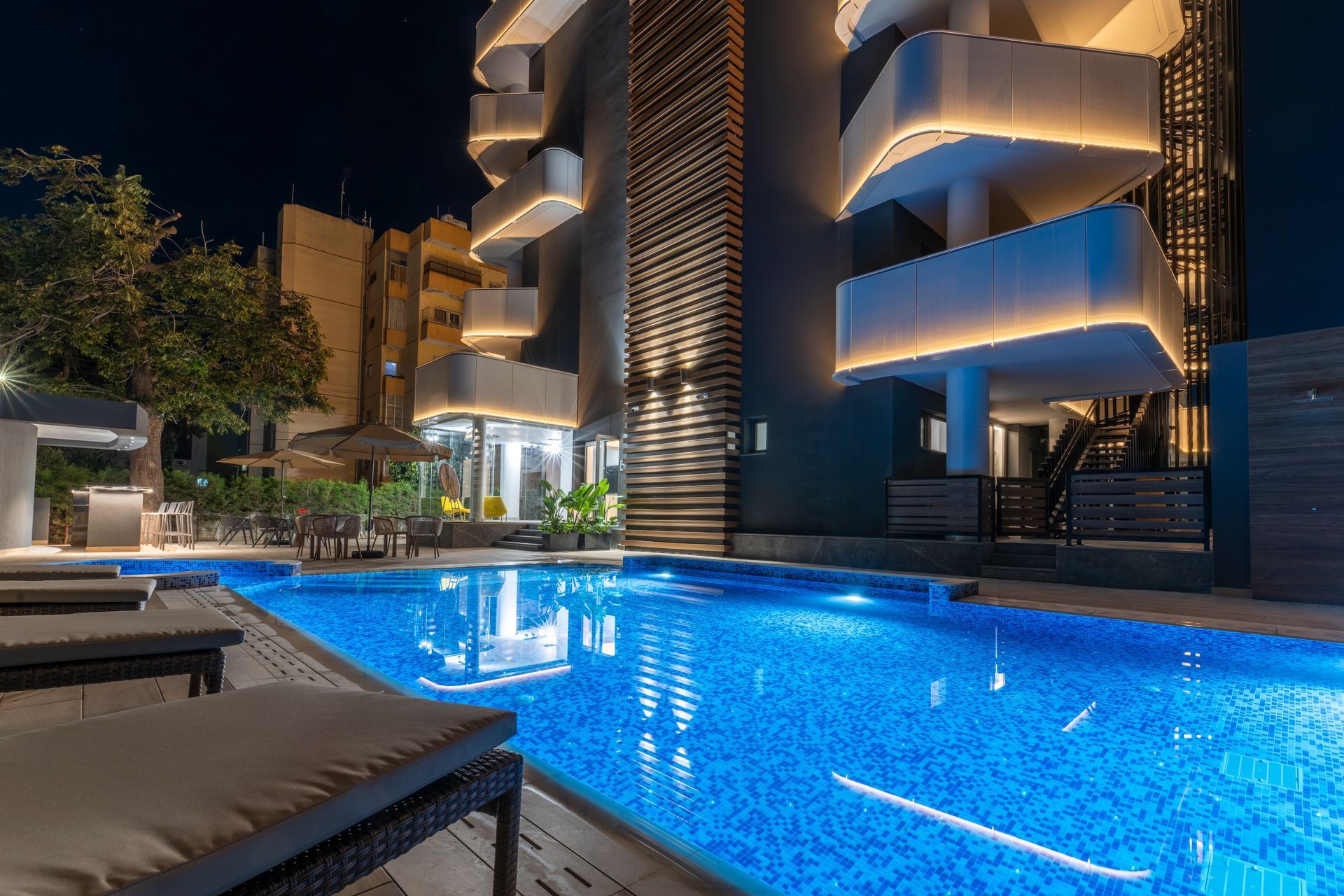
Best for: Beach access, restaurants, social scene The main tourist strip along the coast. Walking distance to Dasoudi Beach, full of dining options, and well-connected by bus. The downside is that it can feel touristy, and summer brings crowds. Modern aparthotels here, like 26 Suites on Kalliopis Street, offer the infrastructure remote workers need (fiber Wi-Fi, equipped kitchens, quiet balconies for calls) while being steps from the beach — plus a heated salt-treated pool (28–30°C year-round) for the kind of midday reset that’s harder to come by in a cold winter rental.
Old Town (Limassol Center)
Best for: Culture, nightlife, walkability The historic center has been revitalized with cafes, bars, galleries, and restaurants. It is the most characterful neighborhood and appeals to nomads who prioritize urban energy over beach proximity. Accommodation options lean toward apartments in converted older buildings.
Potamos Germasogeia (Upper Germasogeia)
Best for: Quiet residential life, value for money A few kilometers inland from the tourist area, this neighborhood is more residential and significantly cheaper. You will need a car or rely on buses, but the trade-off is larger apartments at lower prices and a more local Cypriot atmosphere.
Mesa Geitonia
Best for: Central location, practical amenities A commercial and residential area between the old town and Germasogeia. Good access to shopping, supermarkets, and the main road network. Less scenic but very practical for daily life.
Community and Social Life
One of Limassol’s strengths for nomads is its active international community. Ways to connect:
- Meetup groups: Regular events for entrepreneurs, tech workers, and expats
- Facebook groups: “Digital Nomads Cyprus” and “Expats in Limassol” are active communities for finding events, advice, and connections
- Networking events: The tech and fintech sectors host regular meetups and conferences
- Sports: Beach volleyball, running groups, and water sports provide social opportunities beyond the usual networking events
- Language exchanges: Popular given the multicultural population
Practical Tips for Nomads in Limassol
-
Get a local SIM immediately: Airport shops sell prepaid SIMs. The data backup is essential, and local calls/texts are useful for deliveries and services.
-
Consider a car for weekends: Limassol is walkable for daily life, but Cyprus as an island rewards exploration. The Troodos Mountains, ancient ruins, and quieter coastal villages are all within an hour’s drive.
-
Join a gym with a pool: Many apartment buildings lack fitness facilities. A gym membership also provides a social outlet and structure to your days.
-
Shop at local markets: The Saturday morning market near the old port sells fresh produce at better prices than supermarkets.
-
Book accommodation with a proper workspace: A kitchen table is not a desk. Look for properties that offer dedicated work areas or at least enough space to set up comfortably. Fiber Wi-Fi is non-negotiable.
-
Prepare for summer heat: July and August can exceed 40 degrees Celsius. Air conditioning is essential in accommodation, and many nomads shift to early morning and evening routines during peak summer.
-
Explore beyond Limassol: Nicosia (the capital), Paphos, and the Troodos region all offer different perspectives on Cyprus. Larnaca is just 45 minutes east for flights.
Is Limassol Right for You?
Limassol works best for digital nomads who value:
- Reliable, fast internet without compromise
- A warm climate with genuine beach access
- An English-speaking environment
- A moderate cost of living (not the cheapest, but good value)
- A professional international community
- Safety and political stability
It may not be the best fit if you are looking for the absolute lowest cost of living, vibrant public transit, or a city with a massive nightlife scene (Limassol’s nightlife is good but limited compared to major European capitals).
For those who try it, Limassol has a way of becoming more than just a stopover. The combination of Mediterranean quality of life and modern infrastructure is genuinely hard to find elsewhere, and many nomads who come for a month end up staying for a year.