Planning a Long-Term Stay in Limassol: What You Need to Know
Whether you are relocating for work, testing out life in Cyprus before committing, or simply want an extended Mediterranean escape, Limassol is one of the most practical cities in southern Europe for long-term stays. The infrastructure is modern, English is widely spoken, and the quality of life is high. But planning an extended stay requires more preparation than booking a holiday. This guide walks you through the essentials.
Defining “Long-Term” in Limassol
In the Limassol accommodation market, the term means different things to different people:
- Extended holiday: 2 to 4 weeks
- Medium-term: 1 to 3 months (common for remote workers and digital nomads)
- Long-term: 3 to 12 months (typical for work assignments and trial relocations)
- Permanent relocation: 12 months and beyond
Each category has different accommodation strategies, cost structures, and practical considerations. This guide focuses primarily on stays of one to six months, which is the range where most people need the most guidance.
Accommodation Options
Unfurnished Long-Term Rentals
The traditional rental market in Limassol operates much like other European cities. Apartments are rented unfurnished or semi-furnished on 12-month leases. This makes sense for permanent moves but is impractical for stays under a year due to:
- Lease commitment (typically 12 months minimum)
- Security deposit (usually two months’ rent)
- Need to purchase furniture, kitchen equipment, and linens
- Utility setup (electricity, water, internet — each requires separate registration)
- Time lag (finding, viewing, and securing an apartment can take one to three weeks)
Monthly costs for an unfurnished one-bedroom apartment range from 800 to 1,400 euros depending on neighborhood and condition, before utilities and internet.
Furnished Short-Term Rentals
Platforms like Airbnb and Booking.com have a significant presence in Limassol. For stays of one to three months, furnished apartments offer a middle ground between hotels and traditional rentals. The advantages include flexibility and move-in readiness. The disadvantages include higher monthly costs, variable quality, and the logistical uncertainty of dealing with individual landlords.
Monthly rates for a decent furnished one-bedroom apartment on these platforms typically range from 1,200 to 2,500 euros, with better rates available for longer commitments.
Aparthotels with Long-Stay Options
This category has grown significantly in Limassol and represents perhaps the best option for stays of one to six months. Aparthotels combine the space and independence of an apartment with the consistency and service of a hotel.
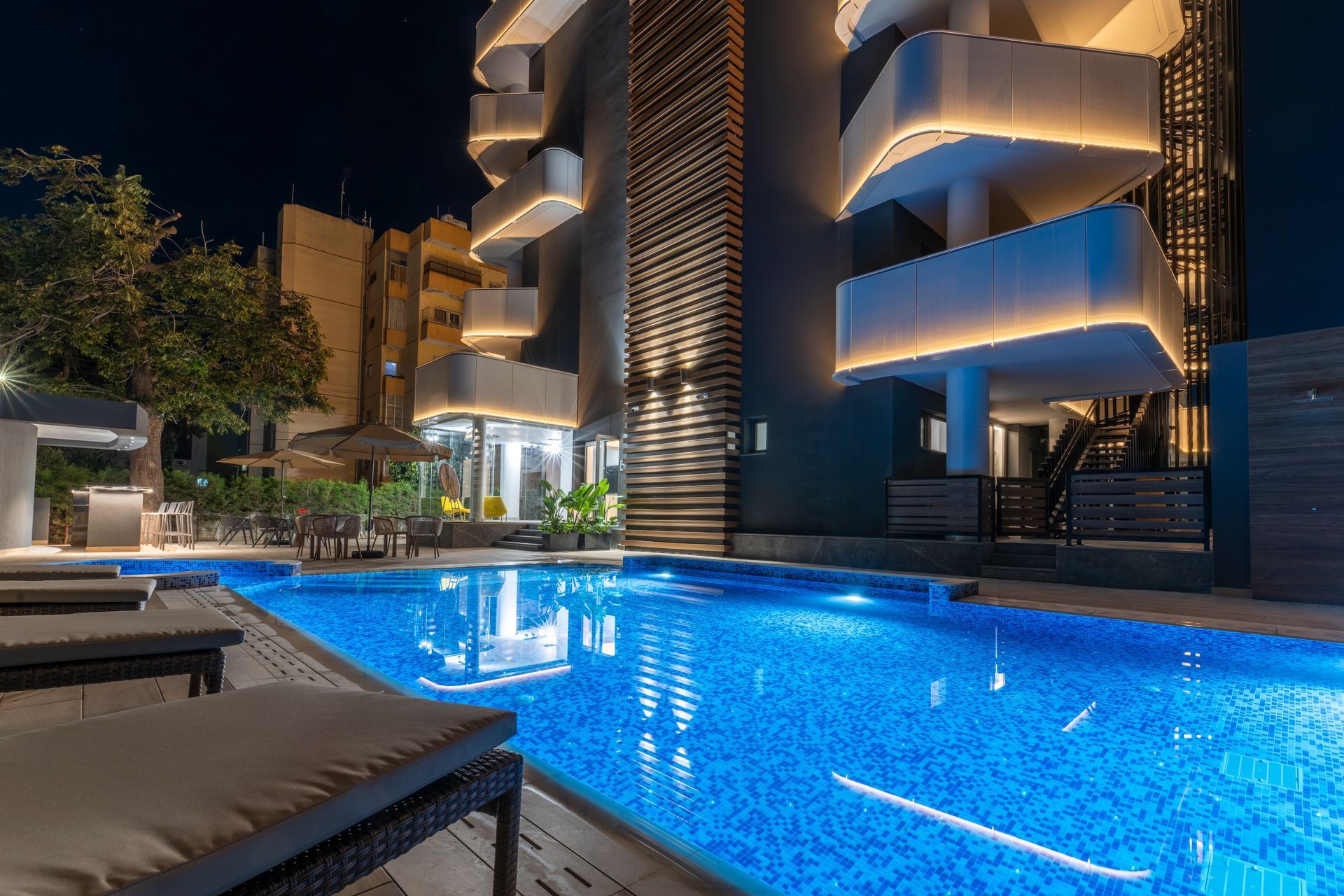
26 Suites in Germasogeia, for example, offers long-stay rates for guests who book extended periods. The advantages are considerable:
- No setup hassle: Everything is provided from day one — furniture, kitchen equipment, linens, towels, Wi-Fi, utilities
- Consistent quality: Unlike individual rentals, a managed property maintains standards
- Flexibility: Easier to extend or shorten your stay compared to a lease
- Amenities: Access to a heated salt-treated pool (28–30°C year-round), heated Jacuzzi, and communal facilities
- Location: Being 200 meters from Dasoudi Beach and in the heart of Germasogeia means you are immediately in a livable, walkable neighborhood
For those testing out Limassol life before committing to a permanent move, an aparthotel stay is essentially a low-risk trial run.
Co-Living Spaces
A newer option in Limassol, co-living spaces offer private bedrooms with shared common areas. These appeal primarily to younger digital nomads and typically cost 600 to 1,000 euros per month including utilities. The trade-off is less privacy and space.
Cost of Living for Long-Term Stays
Understanding the full monthly budget is essential for planning. Here is a realistic breakdown for a single person living comfortably in Limassol:
| Category | Budget Range (EUR/month) |
|---|---|
| Accommodation (furnished) | 1,000 - 2,000 |
| Groceries | 250 - 400 |
| Dining out (moderate) | 200 - 400 |
| Transport (bus or car) | 40 - 500 |
| Utilities (if not included) | 80 - 150 |
| Internet (if not included) | 30 - 50 |
| Health insurance | 50 - 150 |
| Entertainment and social | 100 - 300 |
| Gym | 40 - 80 |
| Total | 1,790 - 4,030 |
For a couple, add roughly 50 to 70 percent to the food, entertainment, and transport categories. Accommodation costs may not change significantly if sharing a one-bedroom.
Choosing the Right Neighborhood
Your neighborhood choice significantly impacts your daily quality of life during a long stay.
Germasogeia (Tourist Area / Coastal)
Pros: Beach access, restaurants, walkable, vibrant Cons: Can feel touristy in summer, higher accommodation costs Best for: Those who prioritize beach lifestyle and social convenience
Potamos Germasogeia (Upper Germasogeia)
Pros: More affordable, residential feel, supermarkets and services nearby Cons: Requires a car or bus for beach access, less scenic Best for: Budget-conscious stays, families wanting a quieter environment
Old Town / City Center
Pros: Character, culture, nightlife, walkable to marina and Molos Cons: Limited parking, older building stock, noise in entertainment areas Best for: Young professionals, culture lovers, those who enjoy urban living
Agios Tychonas
Pros: Upscale residential area, quieter, some sea views Cons: Car dependent, limited walkable amenities Best for: Families, those wanting more space and quiet
Mesa Geitonia
Pros: Central, practical, good value, near shopping Cons: No beach access on foot, less character Best for: Practical long-term living with good access to everything
Practical Essentials for Extended Stays
Banking
Opening a Cypriot bank account is possible but involves paperwork and waiting times. For stays under six months, you can manage with your home bank cards. Revolut and Wise are widely used in Limassol and accepted almost everywhere. ATMs are plentiful.
Health Care
Cyprus has both public and private healthcare. Private clinics and hospitals in Limassol are modern and staffed by English-speaking doctors. Consultation fees at private clinics typically run 40 to 80 euros. EU citizens can use their European Health Insurance Card (EHIC) for public healthcare. Non-EU visitors should arrange travel or health insurance before arrival.
Mobile Phone
Getting a local SIM card is straightforward. Cyta, Epic, and PrimeTel all offer prepaid and monthly plans. A 10 to 20 euro monthly plan provides generous data and is useful for local calls, deliveries, and two-factor authentication.
Driving
Cyprus drives on the left (a legacy of British rule). If you hold an EU license, you can drive freely. Non-EU license holders can drive for up to six months on their home country license. Car rental for extended periods costs 400 to 700 euros per month. Alternatively, the bus system covers most of Limassol for about 40 euros per month.
Groceries and Shopping
Major supermarket chains include AlphaMega, Papantoniou, and Lidl. For fresh produce, the Saturday market near the old port offers the best quality and prices. Specialty international food shops cater to the large expat community, so finding ingredients from home is usually possible.
Laundry
Most long-term accommodations include a washing machine. In aparthotels, laundry facilities are typically available either in-suite or on-site. Self-service laundromats exist but are less common than in other European cities.
Tips from Long-Term Residents
Start with a shorter booking, then extend: Rather than committing to six months of accommodation sight unseen, book one month and use that time to explore neighborhoods and understand your preferences. Many properties, including aparthotels like 26 Suites, accommodate extensions.
Build a routine: Long-term stays are most enjoyable when you establish a rhythm. Find your regular coffee shop, your preferred supermarket, your running route, and your go-to restaurant. This is what transforms a destination from a holiday spot into a place that feels like home.
Join local groups: Facebook groups, Meetup events, and sports clubs are the fastest way to build a social circle. The expat community in Limassol is welcoming and accustomed to newcomers.
Explore on weekends: It is easy to fall into a beach-and-work routine and forget that Cyprus has mountains, ancient ruins, wine villages, and remote coastlines within an hour’s drive. Use weekends to discover the island beyond Limassol.
Budget for air conditioning: Summer electricity bills can spike significantly due to AC usage. If your accommodation includes utilities, this is one less thing to worry about. If not, budget an extra 50 to 100 euros per month during June through September.
Book your accommodation directly: For long-term stays, contacting properties directly often yields better rates and more flexibility than booking through platforms. 26 Suites, for instance, offers direct booking at 26suites.com/book, which can provide advantages for extended stays.
Is Limassol Right for Your Long-Term Stay?
Limassol excels as a long-term base for people who value a Mediterranean lifestyle with modern infrastructure. The combination of reliable internet, English-language accessibility, safety, and beach culture makes it particularly well-suited for remote workers, retirees, and families.
The city is not without limitations. Public transport, while functional, is not as extensive as in major European capitals. Summer heat is intense. The nightlife and cultural scene, while growing, does not compare to cities ten times its size.
But for those who prioritize quality of daily life — good food, warm weather, sea access, safety, and a welcoming international community — Limassol delivers consistently. And the fact that you can test it out through flexible accommodation options before making any long-term commitment makes the decision almost risk-free.